
With near 400 entries from all over the world, the sixth edition of the Marksman Design Award (2007 - 2008) attracted a record number of designs. Students had to design a writing instrument for the Marksman Collection, and were challenged to make a non-traditional design for this traditional market. The winning design is the fascinating, almost architectural 'Höhle' pen that captures the precision and prestige of a classic writing implement in a contemporary design. Second prize went to the Tin Pen, an inkless writing implement that draws on medieval 'metalpoint' craftsmanship for its inspiration, while 'Contour', a pen that re-invents the way we write, followed closely with the third prize.
Design the Perfect Pen
This edition of the Marksman Design Award challenged young design students to 'Design the perfect pen'. From a total of 1004 original applications, 386 designs from 264 courses in 54 countries made it to the fi nal judging. Two of the eight prizewinners came from the USA, the remainder from Europe and Israel. The quality of the entries was once again superlative, and many are worthy for inclusion in the Marksman Collection.
A Non-traditional Design for a Traditional Market
The students had to design an original writing implement for the Marksman Collection. It had to be commercially feasible, suitable for production, have space for a logo or message, safe to use, environmentally responsible, cost no more than $15 to produce, and have an expected life of at least three years. The design motivation and presentation were also taken into consideration.
Rebirth of the Classical Writing Instrument
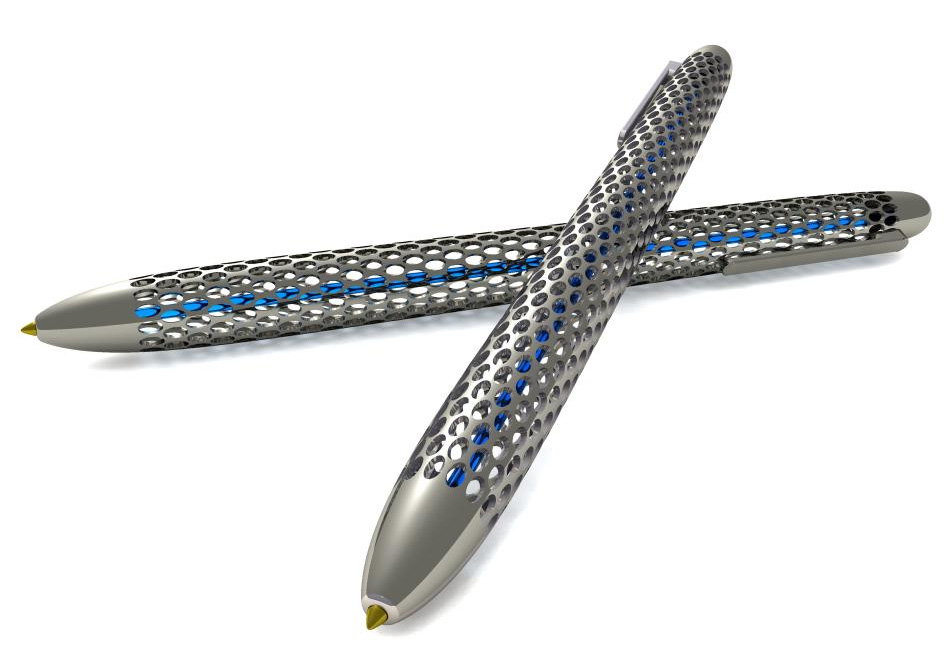
The winning design called 'Höhle' from Jacques Laramie of the University of Cincinnati (USA) was unanimous selected by the jury. Its hollow barrel and matrix of holes impressed the jury, who commented, "It toys with transparency in a way similar to the design of contemporary buildings", commented one juror. The second prize went to student Patricia Susana Santos of the University of Lisbon (Portugal) for her 'Tin Pen', an inkless writing implement that fuses medieval 'metalpoint' writing techniques with modern aesthetic design. Third prize was awarded to 'Contour' by Jeff Mansur of the San Jose State University (USA), a pen design that re-invents the way we write.
Winning Designs
First Prize: Jacques Laramie
Höhle, rebirth of the classical writing instrument
$10,000 went to Jacques Laramie (22) of the University of Cincinnati (USA) for his Höhle, a design that in the eyes of the jury represents "a rebirth of the classical writing instrument". Its hollow barrel with a matrix of holes toys with transparency in a way similar to the design of contemporary buildings, while the classic shape and very thin wall create an exclusive image. PF Concept International will also consider including the Höhle in the Marksman Collection.

Second Prize: Patricia Susana Santos
Tin Pen say goodbye to ink problems
The "Tin Pen" from Patricia Susana Santos (23) of the University of Lisbon (Portugal) wins $2,500 for its unique approach. Using tin tips that write on ordinary paper, it is inspired by a traditional technique known as metalpoint used by medieval artists and scribes. Writing with the Tin Pen has an "almost ritualistic feel", said one juror. "It is a socially conscious design, environmentally sustainable and beautifully executed. A conversation piece", said another.
Third Prize: Jeff Mansur
Contour, re-inventing the way you write
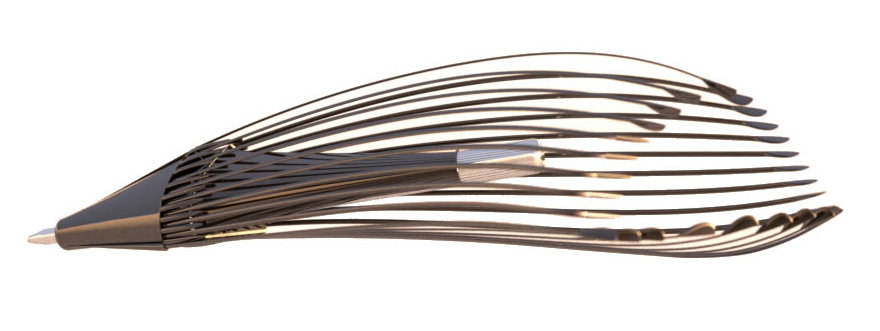
Jeff Mansur (35) of the San Jose State University (USA) won $1,000 for his 'Contour', a pen with a personalized grip inspired by Japanese tea brushes. It features an ergonomically responsible body that moulds itself to the contours of your hand. It "re-invents the way you write with a tactile experience that you are compelled to explore", said one juror. Another added, "It crosses design boundaries, hinting at contemporary architecture. It goes beyond philosophy".
Honorable Mention
Black Box, first create, then draw
Jeroen van den Bosch (25), University of Twente (the Netherlands)
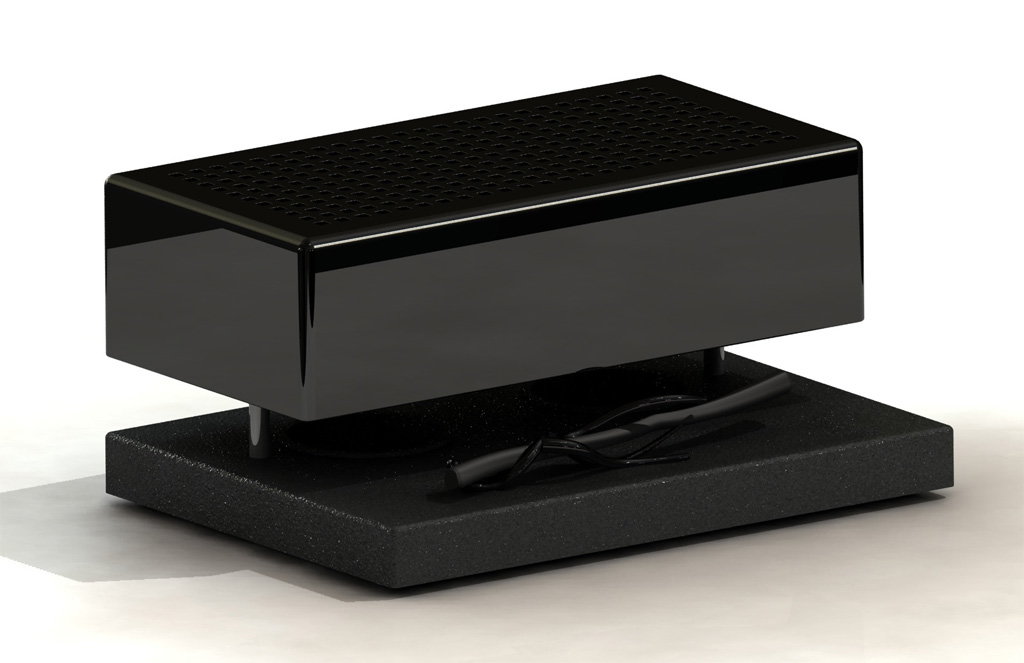
The 'Black Box' from Jeroen van den Bosch of the University of Twente (the Netherlands) is unique as it engages the owner in the process of creating a writing implement. "This ritualistic, almost religious quality will appeal to artists", said a jury member. It involves selecting a twig and placing it in the box to turn it into charcoal. It missed the top three as the jury felt that it was a very specifi c niche product, but because the designer dared to think differently, it deserved recognition.
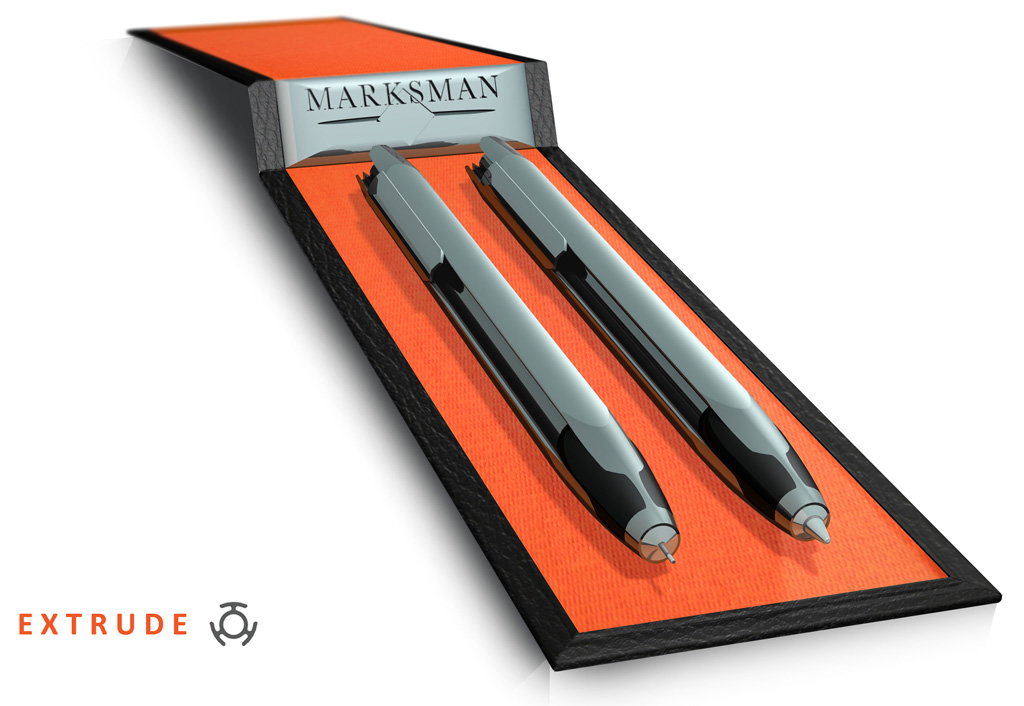
Extrude, more than a boxed set
Bart Koehorst (24), Christelijke Hogeschool Windesheim (the Netherlands)
Many entries included a case and two or more writing instruments, but one stood out from the crowd: the 'EXTRUDE', from Bart Koehorst of the Christelijke Hogeschool Windesheim (the Netherlands). He succeeded in integrating the cool mechanical precision of extruded aluminium into an elegant and functional design. One jury member said, "It has a high-tech, masculine feel that comes from the exposed extrusion in combination with the precision turned finish".
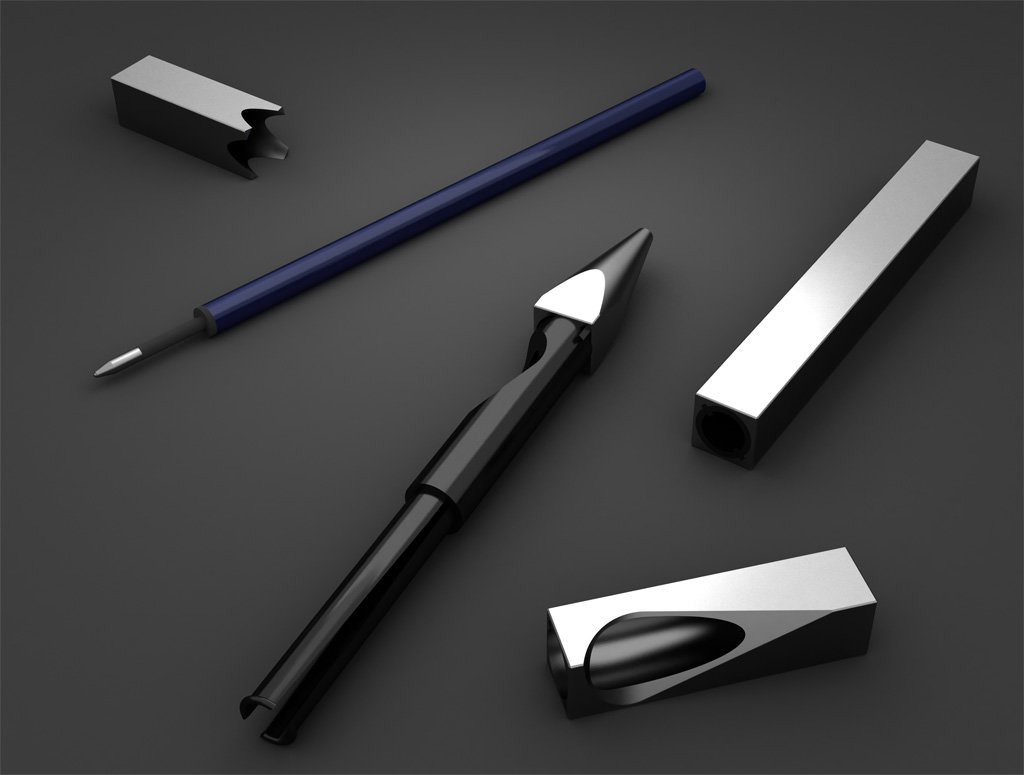
Drop, sculpture you can write with
Peter Harach (22), Brno University of Technology (Czech Republic)
Peter Harach of the Brno University of Technology (Czech Republic) took a "very cultural approach" to the design of his 'Drop' pen. Described by the jury as "sculpture you can write with", its stainless steel barrel has a very high-end look. Members of the jury were particularly impressed by the simplicity of the design that teases with a machined 'notch' that reveals the refi ll as well as providing a convenient fi nger hold for comfortable writing.
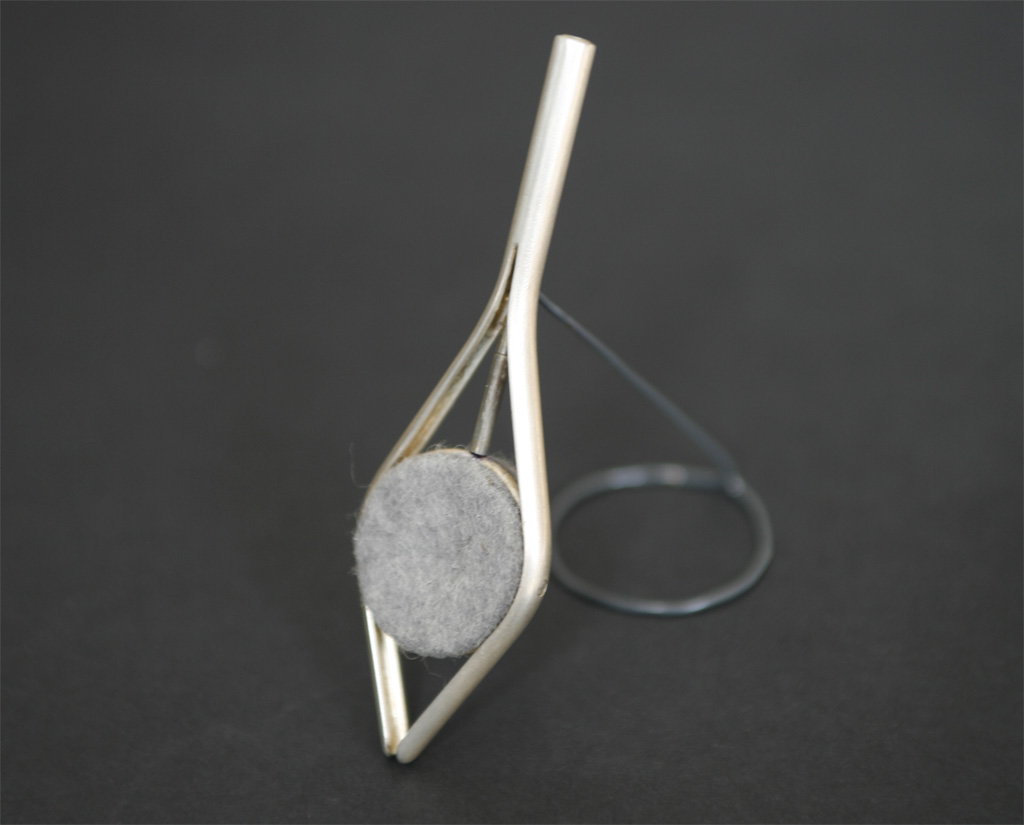
WOMpen, a feminine phenomenon
Roni Margolin (27), Shenkar College of Design (Israel)
Undeniably feminine, the 'WOMpen' from Roni Margolin of the Shenkar College of Design (Israel) is a fashion accessory as a writing implement. Its name is derived from 'womb', and its design is clearly inspired by this wonderful aspect of a woman's body. "It dares to go for a specifi c user group, and is therefore a very personal gift", said one juror. Designed around an organically shaped metal frame, the rotating centerpiece clicks into place to reveal the writing tip.
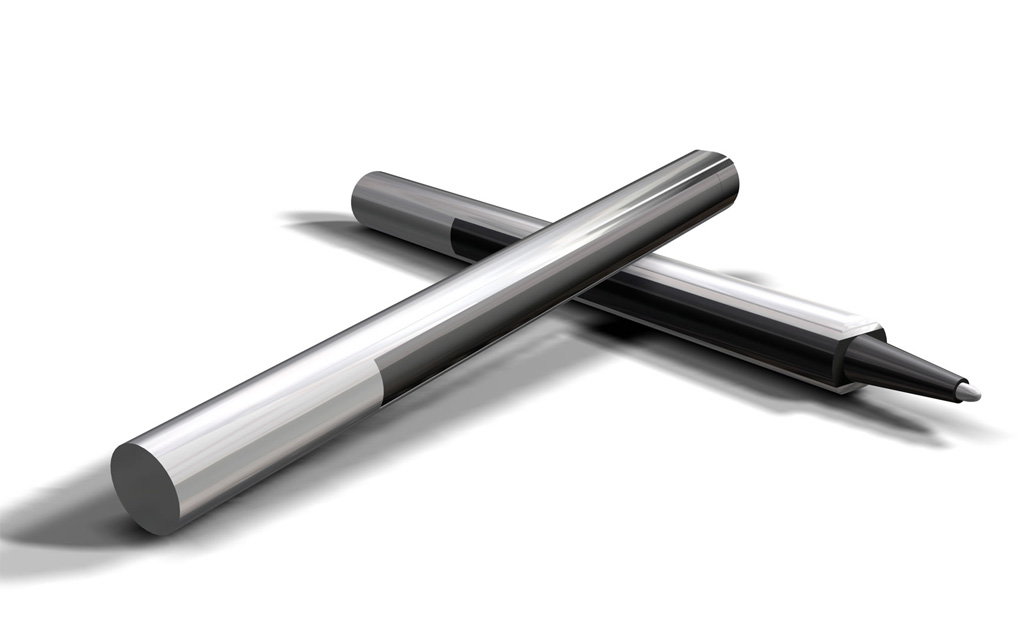
Rotatory Pen, intuitive operation, simple aesthetics
Laurent Falque (21), E.N.S.A.V. la Cambre (Belgium)
Compact foldaway writing instruments were popular and the 'Rotatory Pen' from Laurent Falque of the E.N.S.A.V. la Cambre (Belgium) is so stunningly simple that it also deserves recognition. Another side to the design that impressed the jury is its intuitive operation. Made from quality materials it is a high-end product, and in plastic, it could also be a mass-market gift. "The Rotatory Pen could easily form the basis of a family of writing instruments".